
What Is the Lowest Possible Credit Score? | 2026 Updated
- Credit Savvy Expert

- 3 days ago
- 5 min read

Quick Answer
The lowest possible credit score is 300 in standard models like FICO and VantageScore.
This score falls in the “poor” range and indicates very high financial risk due to issues like missed payments, defaults, or bankruptcy.
Some industry-specific FICO scores (like auto loans) can go as low as 250, but 300 is the standard minimum and widely accepted baseline.

~ Table of Contents
1. Credit Score Ranges: What Each Level Means
2. Can Your Credit Score Be 0? Truth Explained
3. Top Reasons Why Credit Scores Drop to 300
4. What Happens When You Have a 300 Credit Score
5. How Rare Is the Lowest Credit Score?
6. How to Improve a 300 Credit Score Fast
7. How Long Does Credit Score Recovery Take?
Credit Score Range Explained (Simple)
Credit scores are generally between 300 and 850, also referred to as the FICO score range, and each range indicates how reliable you are as a borrower. A positive score indicates to lenders that you are a reliable person, and a negative score implies risk and financial instability.
Knowing where you stand helps you understand your chances of getting approved for loans or credit cards. It also clarifies the meaning of a credit score of 300, which represents the lowest level of borrower trust.
Score Range | Rating | Meaning |
300 - 579 | Poor | High-risk borrower |
580 - 669 | Fair | Below average |
670 - 739 | Good | Acceptable |
740 - 799 | Very Good | Low risk |
800 - 850 | Excellent | Best borrowers |
👉 The majority of lenders do not lend below 580 because it is classified as bad credit.
Can a Credit Score Be 0?
A credit score of 0 does not exist in any standard scoring model. The system is set to begin at 300, which is the lowest point that can be measured. When a person has never used credit, he/she simply do not have a credit score, not a 0 score.
This is one of the misconceptions, and most users believe that zero means no credit. The fact is that lenders simply do not have sufficient data to form a score in such a situation.
What Causes the Lowest Credit Score?
Reaching a 300 credit score usually happens after multiple negative financial actions over time. It is rarely caused by a single mistake and instead reflects a pattern of poor credit management. Understanding what affects your credit score can help you avoid falling into this category.
Missed payments, high credit usage, and serious financial events like bankruptcy or collections are the main reasons behind such a low score. These indicators send a good message to lenders that a borrower might not make payments on debts in a reliable manner.
What Happens If Your Credit Score Is 300?

A credit score this low can create serious financial limitations in everyday life. Lenders are less likely to approve loans, and even if they do, the terms are usually very strict. This can make borrowing expensive and difficult.
In addition, renting a home, getting approved for credit cards, or even securing certain jobs may become harder. A low score affects not just loans, but overall financial flexibility and opportunities.
How Rare Is a 300 Credit Score?
Having the lowest possible credit score is extremely rare. Most people fall somewhere in the middle ranges and never reach the absolute bottom of the scale. A score of 300 usually reflects severe and repeated credit issues over time.
Even major credit data show that only a small percentage of individuals have scores in this range. This makes it an uncommon but serious financial situation.
How to Improve a Very Low Credit Score
Improving your credit score is possible, but it requires consistency and patience. Small positive actions repeated over time can lead to noticeable improvements. The key is to focus on habits that build trust with lenders and help you improve your credit score fast over time.
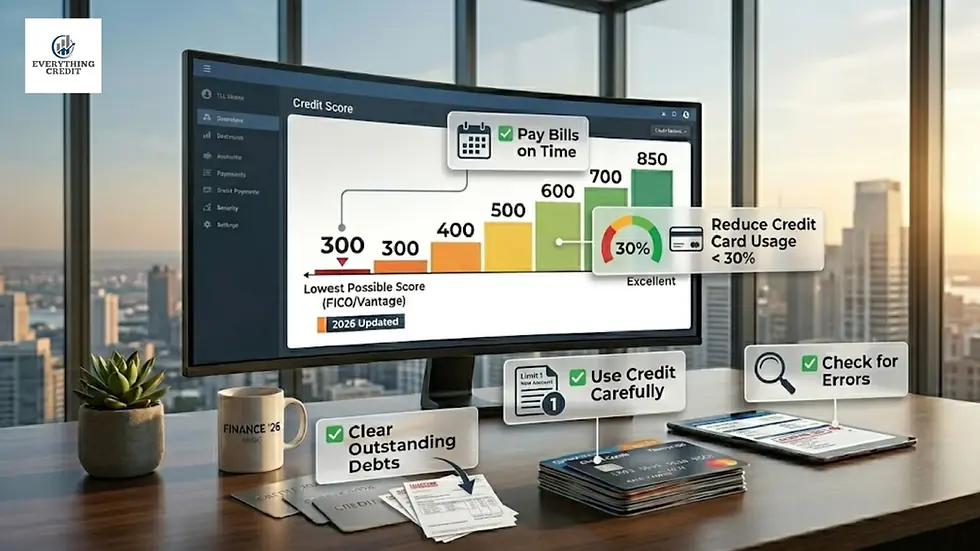
✅ Pay Bills on Time
Timely payments are the most important factor in improving your score. You can set reminders or automatic payments to keep you on track and prevent additional harm.
✅ Reduce Credit Card Usage
Try to keep your credit usage below 30% of your total limit. Reduced use indicates that you are using credit responsibly and can enhance your profile.
✅ Clear Outstanding Debts
Paying off overdue accounts and collections can gradually improve your score. Even partial payments can have a positive impact over time and support your efforts to fix poor credit.
✅ Use Credit Carefully
Avoid opening too many new accounts at once. Limited and responsible use assists in reconstructing your credit profile and making lenders more confident.
✅ Check for Errors
Sometimes, incorrect information appears on your credit report. Correcting these mistakes can boost your score in a short time and eliminate some undeserved negative points.
How Long Does It Take to Recover?
The time required to recover your credit score depends on the severity of the damage. Minor improvements can start to appear within a few months if you consistently follow the right habits. But it can also be difficult to regain good credit over time, depending on the circumstances. Most of the time, it may take 6 months to 2 years to experience a huge difference. The key is to remain consistent and not do anything negative during this time. Read More: How Long Does It Take to Repair Your Credit? Real Timeline
Simple Real-Life Example
Imagine someone who misses multiple payments, maxes out credit cards, and has debts in collections. Their score could drop close to 300 due to these combined factors, which clearly shows the VantageScore minimum score level in real scenarios.
However, by paying bills on time and reducing debt, they can slowly rebuild their score over time. Consistent positive behavior can gradually move them out of the lowest credit range.
Frequently Asked Questions
What is the lowest credit score possible?
The lowest credit score possible is 300 in standard credit scoring models. This is the minimum level used to measure financial risk and borrowing behavior.
Is a 300 credit score bad?
Yes, a 300 score falls in the bad credit score range and indicates high financial risk. It can make it difficult to get approved for loans or credit.
Can I recover from a 300 credit score?
Yes, recovery is possible with consistent effort and better financial habits. Over time, your score can improve as your credit behavior becomes more stable.
Why doesn’t the score go below 300?
Credit scoring systems are structured to start from 300 as the lowest point. This ensures a standardized way of measuring credit risk across all users.


Comments